What to Do During and After a Tender to Win More Contracts (Even When You Lose)
TLDR: Tendering isn’t just about submitting a compliant response and hoping for the best. For bid managers and tender teams, the real advantage comes from how you behave during the tender and how you position yourself after the contract is awarded, especially in the 90 days that follow.
At its core, tendering is fundamentally a function of Sales and Marketing.
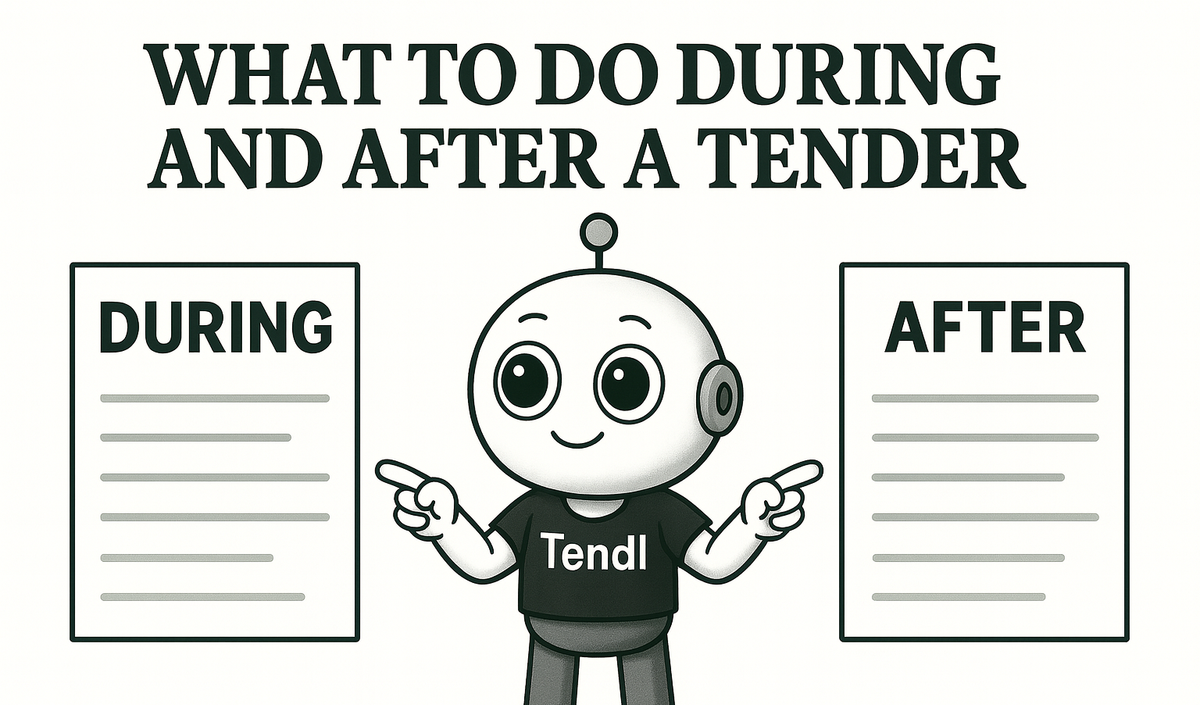
This is a playbook breaking down the during and after tactics of the tender process. The goal of this guide is to show you how you can stand out, build trust and set yourself up to win the next contract (or even pick up the current one if it falls through).
Let’s dive in.
During the Tender: Win Trust Before You Win the Contract
1) Lead with sales-led messaging. Without sounding 'salesy'
A great tender response makes it easy for evaluators to choose you.
Your job is to reduce any doubts they may have by:
- Using clear, confident messaging that maps to outcomes.
- Making it obvious the value you'll deliver, how you'll deliver it and what success looks like.
- Not hiding behind generic capability statements. Be specific. e.g. swap vague claims for contextual proof "We reduced invoice processing by 32% in 8 weeks for a government client by automating approvals" and then tell them how you'll translate this for the current opportunity.
2) Requirements, honesty and company fit
One of the quickest ways to lose trust with a purchaser is by overstating your capabilities. If you “make up” compliance credentials or imply you can meet requirements when you can’t, you risk setting yourself up for failure.
At the end of the day, your business is responsible for delivery, and falling short on your promises can damage your reputation far more than losing the bid.
It is important to remember that requirements can often act as a 'wish list'. Procurement teams don't always expect perfection and can even accept trade-offs. You can still win even if you don't tick every box, as long as you're transparent and propose credible alternatives.
Of course, this will not always be the case and does come down to a stroke of luck. But there is a fine line between saying you can do everything, then underdelivering and losing future credibility, versus being honest, positioning your strengths and still winning when your missing capabilities are not a true priority to the purchaser.
3) Ask questions early...it actually signals competence
Many suppliers wait too long or don't ask anything at all. The best tender teams treat Q&A as a key part of their strategy, not just admin.
Ask questions that:
- Clarify evaluation priorities (what matters most)
- Uncover hidden constraints (timeline, stakeholders, risk concerns)
- Confirm assumptions you're tempted to make
Strong questions position you as a partner, not just a bidder.
4) Submit early!
Most teams submit at the last minute, which means errors, stress and weaker review cycles. Submitting early gives you:
- More internal time to review and refine
- A calmer, cleaner response
- The chance to act fast if something changes
5) Explore panels and closed market opportunities
Some of the best work is awarded in restricted markets, panels, preferred supplier lists and closed invites where only a handful of suppliers are approached.
If you're always competing in fully open tenders, you're missing out on some of the ease that comes with being an insider.
Make it a goal to become one of the insiders by:
- Building relationships before tenders drop.
- Tracking agencies with recurring needs.
- Proactively demonstrating value between procurements (this could be as simple as shooting through a compliance update relevant to their category).
After the Bid: What You Do Determines Your Next Wins
1) Get the right contact and reach out immediately
When a contract is awarded don't just disappear. Identify the Head of Procurement or relevant category lead and make contact quickly. The goal is to be visible, show that you care and also gather critical feedback for your next round.
If you lost, your first message should be professional, brief and future-focused.
If you were notified by email (which is a post-bid requirement in many cases), reply directly. If the contract is awarded and you weren't notified, use tools and tracking to chase it up and send a follow-up message.
2) Ask for feedback the right way
Feedback is invaluable and should be a vital part of your tendering processes. But when seeking feedback, you need to approach it well.
Ask for specific feedback on one or two areas that you could strengthen, and show that you appreciate their time.
Ask for clarification on exact areas that may have been lagging in your proposal e.g. capability, pricing, risk or alignment. You don't know what you don't know, and will likely keep making the same mistakes unless you source the knowledge to improve.
3) Remember that contracts often fall through and you want to be second in line when it happens
Even after award, contracts can stall, vendors can underperform and deals can collapse. This is where your post-tender behaviour plays all the importance.
If you've handled the loss well, stayed professional and kept a relationship open, you might become the obvious "next call".
This is one of the most overlooked tender strategies, but can happen if you position yourself right.
Which leads perfectly into point 4.
4) Stay in touch across the year
The best suppliers don't only show up when a tender opens. They keep light, value-based contact:
- A check-in call
- Providing a short insight relevant to their category
- A helpful offer providing assistance/ options
And throughout the year it pays dividends to keep chatting with purchasers, tracking delivery performance and having conversations that make you familiar and credible.
One tip: segment your outreach, have different discussion points for the procurement team and the delivery team. Procurement will care about how you align to the processes, the delivery team will focus on ways you can make their lives easier.
The Competitive Edge: Treat Tendering like a Relationship Driven Process
Tendering is not a single event. It's a cycle. If you show up early, respond honestly and follow up diligently, you'll win more often, and even when you don't you'll build a pipeline of future opportunities.
Because the end goal is to become a reliable business that is trusted and has relationship leverage to make the tendering process run much more smoothly.
Keep in mind: the tender cycle starts from when the previous contract is awarded, not when the approach to market is listed.
Summary
Tendering isn’t just about winning a bid. It’s about building trust and momentum that makes the next procurement decision easier.
- During the tender: use clear, sales-led messaging backed by proof, and be upfront about fit (no vague capability claims).
- Engage early: ask sharp questions, submit early, and pursue panels/closed-market opportunities to reduce competition.
- After the award: contact procurement quickly, request actionable feedback professionally, and stay in touch because contracts can change.
Do this consistently, and you’ll tighten your bidding process, sharpen your insight and position yourself as the reliable supplier that purchasers trust and see as a true partner.