Static Templates to a Dynamic Library: The Faster Way to Standardise Tender Responses
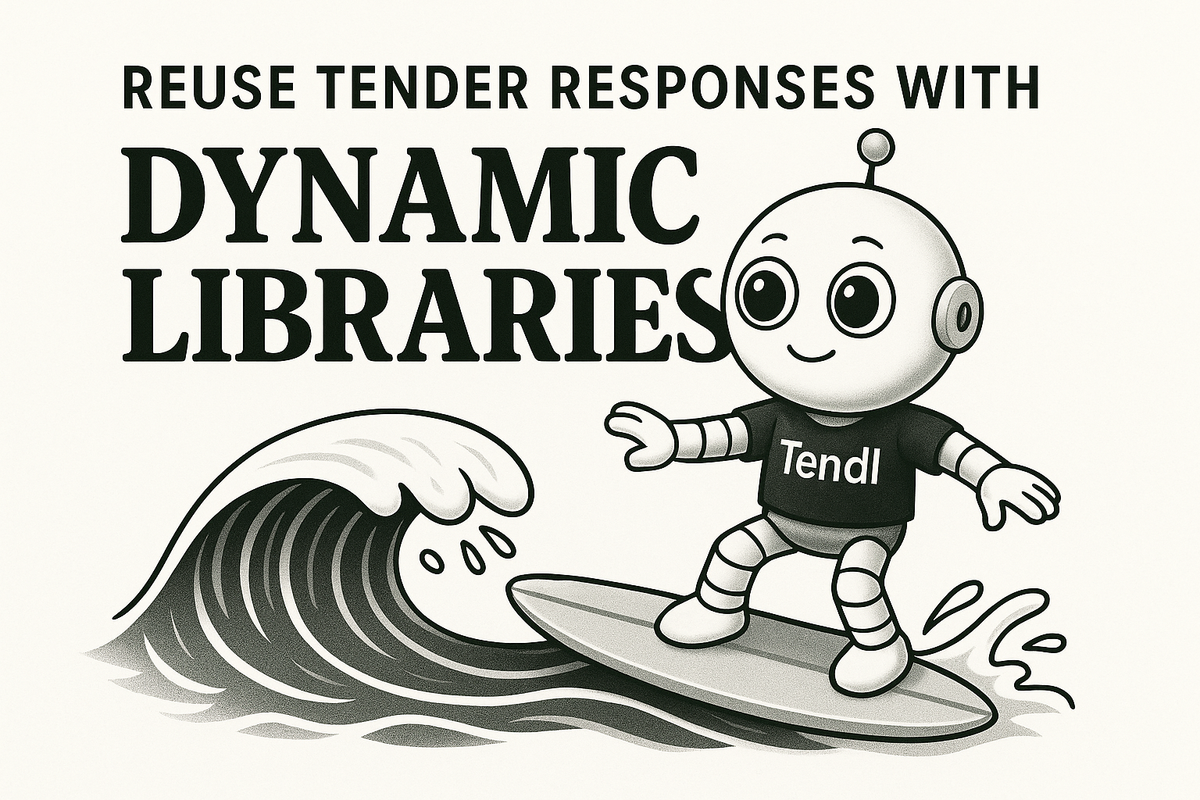
A question we're hearing a lot in Tendering recently is “How can we reuse our templates more effectively?”
The answer lies in shifting from static templating to dynamic resource libraries.
The Difference Between Static Templates and Dynamic Libraries
Static approach: Find template → Copy content → Spend hours adapting → Submit generic-sounding proposal
Dynamic approach: Build resource library → Input RFP requirements → AI pulls relevant resources → Generate contextual draft relevant to your company → Refine and submit compelling proposal
The difference is that dynamic libraries are adaptable and enable customisation rather than rigid one-use templates. Instead of forcing old content to fit new contexts, you're creating contextual responses from proven elements that can be reused.
What Goes Inside Your Dynamic Library
Rather than maintaining fixed templates, you build a collection of your best content that can be adapted for each new opportunity.
Your library contains:
- Historical responses from previously won and lost tenders
- Core value propositions with context about when and how they work best
- Context documents that explain client backgrounds, industry challenges, and solution approaches
The core difference is that these aren’t templates to copy from, they’re resources that give AI the context to build specific new responses.
How It Works
When you start a new proposal, AI uses your resource library to generate tailored content.
Instead of copying and pasting from a static company overview, the system pulls relevant examples from past wins, adapts your value propositions to the specific client context, and builds responses that feel custom written for this opportunity.
The library becomes more valuable over time. Each win or loss feeds back into the system, improving future responses and building a deeper understanding of what works for different client types and opportunity contexts.
The bottom line
Stop spending time retrofitting old content. Start leveraging your past wins to create future competitive advantages. Dynamic libraries transform your historical successes into tailored responses for every new bid.
You can do all of this inside Tendl! Book a demo and give it a go yourself.