AI in Tendering: Why Organisational Culture Defines Successful Adoption
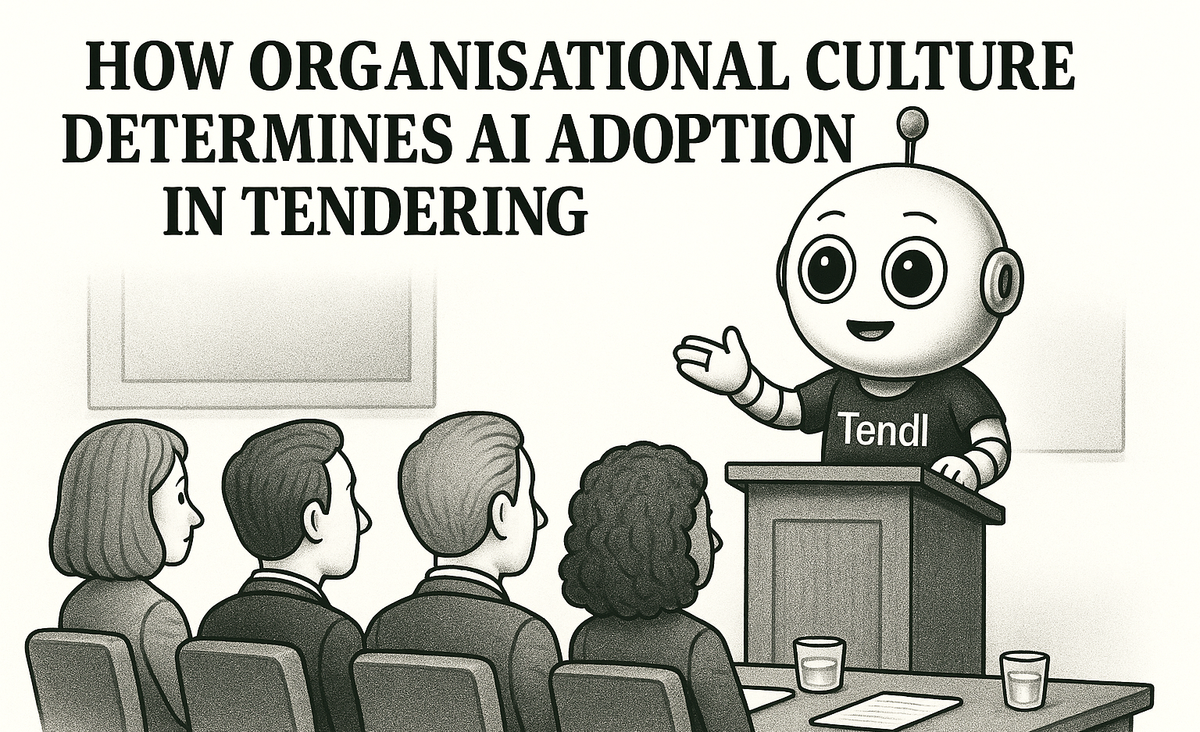
TLDR: Technology moves faster than culture. Companies with adaptive cultures that seek alignment and continuously integrate new approaches are better equipped to thrive in a disruptive environment. Meanwhile, organisations with fixed mindsets that resist the new get steadily outcompeted and left behind. AI adoption starts with organisational culture.
The Fundamental Misunderstanding
The ambition for AI adoption is clear. EY’s 2025 Global CPO Survey revealed that 80% of global CPOs plan to deploy GenAI in some capacity within the next three years. However, only 36% have currently deployed GenAI in a meaningful way.
This highlights the gap between awareness and action, reflecting the ongoing hesitation and resistance within the tendering industry regarding AI adoption.
The root of this hesitation stems from a constrained organisational perspective. Many leaders view AI as simply an automated writing tool, which is perceived as eroding professionals' capacity for critical thought and human judgment during the tender process.
Yet, the purpose of AI is much broader than this. Tendering is plagued by burnout from heavy amounts of administrative tasks, excessive workload, slow-moving collaboration, and countless hours in the weeds editing and proofing work.
The true goal of AI is not to replace human writers but to alleviate these very burdens, moving beyond basic text generation to address fundamental process challenges that stifle productivity.
Organisational culture sits at the cusp of this reframe.
Reframing AI: From Tool to Infrastructure
The goal of AI integration is to streamline the time taken to complete the energy draining administrative tasks to free up more time for humans to focus on higher-level strategic work and client relationships. It's not only to 'write tenders for you'.
The Crucial Distinction for Leadership
The next generation of AI adoption isn’t about using a public chatbot. It’s about harnessing advanced, organisation-specific technology built to solve clearly defined market problems.
This shift means the mindset becomes tendering with purpose built systems tailored to the tender lifecycle. Unlike generic AI, these proprietary and secure platforms are optimised to enhance efficiency while keeping human insight at the centre of the process.
Nailing this reframe, moving from AI as a generic tool to a strategic asset, is critical to securing organisational alignment, overcoming security hesitations and unlocking a lasting competitive edge.
Building the Cultural Foundation: Four Leadership Shifts
Successfully integrating AI into the tender process requires a top-down commitment to cultural change:
- Address Fears
A common concern with AI is job replacement. But leaders must be clear, employees who use AI aren't replaced; those who don't fall behind. This is simply because of the advantages that come with workload optimisation.
- Purposeful Integration
To build trust for AI integration:
- Provide comprehensive, hands-on training and support.
- Choose enterprise-grade tools with proper security and governance.
- Implement closed systems, not public AI platforms, to protect IP.
- Start with Problems, Not Technology
Don't just push a tool; solve a frustration.
- Ask your team: "What repetitive work prevents you from adding strategic value?"
- Rather than: "How can we use AI?"
This approach surfaces real needs and builds immediate buy-in from the Bid Managers and Tendering Professionals who will actually use the tools.
Instead of debating whether AI is needed to "automate writing,". It may be useful for leaders to first assess the tender process to identify areas of maximum lag to clearly define where performance bottlenecks exist and what value is being left on the table. This makes the use case for an optimised system immediately clear.
4. Position AI as Essential Infrastructure
Like CRM systems enhanced (rather than replaced) salespeople, AI-powered tender tools make writers more strategic. They are infrastructure for efficiency, not substitutes for expertise.
The Competitive Reality
While some organisations debate whether to "allow" AI, forward-thinking organisations are already deploying these systems to gain a competitive edge:
- Respond to more opportunities without growing headcount.
- Reduce burnout and retain top talent
- Redirect human expertise toward relationship-building and strategy.
- Build institutional knowledge that improves with each bid.
Summary
The cultural shift required isn't about forcing technology adoption. It's about recognising that tendering excellence increasingly depends on systems that free humans to be more human and streamline the tasks that are contributing to systemic industry burnout.